 Add to Chrome
 Add to Firefox
 Add to Edge
Angular Sensing by Highly Reconfigurable Pixel Antennas with Joint Radiating Aperture and Feeding Ports Reconfiguration
Jan 19, 2026
Angular sensing capability is realized using highly reconfigurable pixel antenna (HRPA) with joint radiating aperture and feeding ports reconfiguration. Pixel antennas represent a general class of reconfigurable antenna designs in which the radiating surface, regardless of its shape or size, is divided into sub-wavelength elements called pixels. Each pixel is connected to its neighboring elements through radio frequency switches. By controlling pixel connections, the pixel antenna topology can be flexibly adjusted so that the resulting radiation pattern can be reconfigured. However, conventional pixel antennas have only a single, fixed-position feeding port, which is not efficient for angular sensing. Therefore, in this work, we further extend the reconfigurability of pixel antennas by introducing the HRPA, which enables both geometry control of the pixel antenna and switching of its feeding ports. The model of the proposed HRPA, including both circuit and radiation parameters, is derived. A codebook is then defined, consisting of pixel connection states and feeding port positions for each sensing area. Based on this codebook, an efficient optimization approach is developed to minimize the Cram\acute{\mathrm{\mathbf{e}}}r-Rao lower bound (CRLB) and obtain the optimal HRPA geometries for angular sensing within a given area. Numerical results show that the HRPA reduces the angle estimation error by more than 50% across the full three-dimensional sphere when compared with a conventional uniform planar array of the same size. This demonstrates the effectiveness of the proposed approach and highlights the potential of HRPA for integrated sensing and communication systems.

Multistatic Integrated Sensing and Communication System in Cellular Networks
May 22, 2023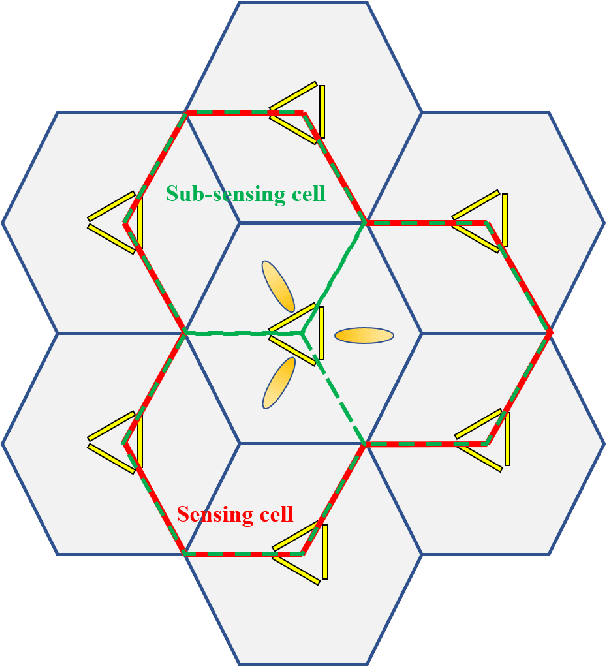

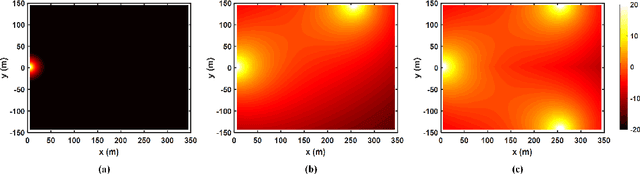
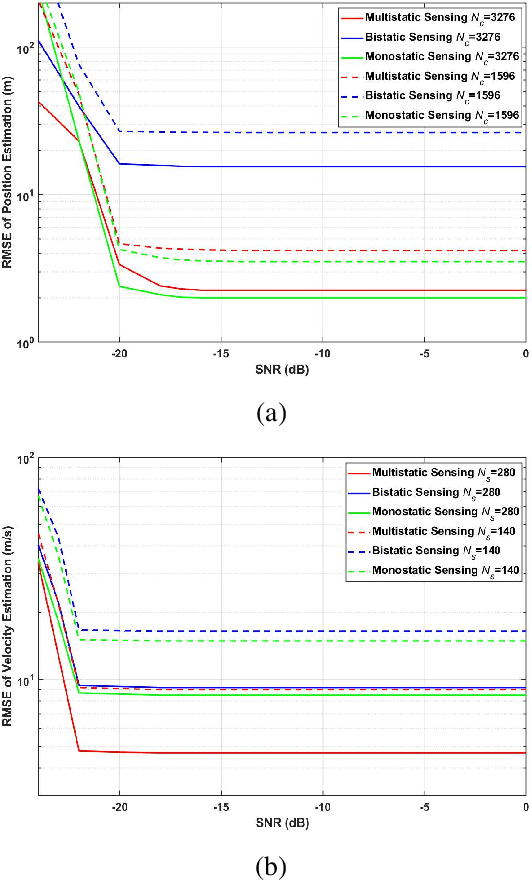
A novel multistatic multiple-input multiple-output (MIMO) integrated sensing and communication (ISAC) system in cellular networks is proposed. It can make use of widespread base stations (BSs) to perform cooperative sensing in wide area. This system is important since the deployment of sensing function can be achieved based on the existing mobile communication networks at a low cost. In this system, orthogonal frequency division multiplexing (OFDM) signals transmitted from the central BS are received and processed by each of the neighboring BSs to estimate sensing object parameters. A joint data processing method is then introduced to derive the closed-form solution of objects position and velocity. Numerical simulation shows that the proposed multistatic system can improve the position and velocity estimation accuracy compared with monostatic and bistatic system, demonstrating the effectiveness and promise of implementing ISAC in the upcoming fifth generation advanced (5G-A) and sixth generation (6G) mobile networks.
Using Loaded N-port Structures to Achieve the Continuous-Space Electromagnetic Channel Capacity Bound
May 25, 2022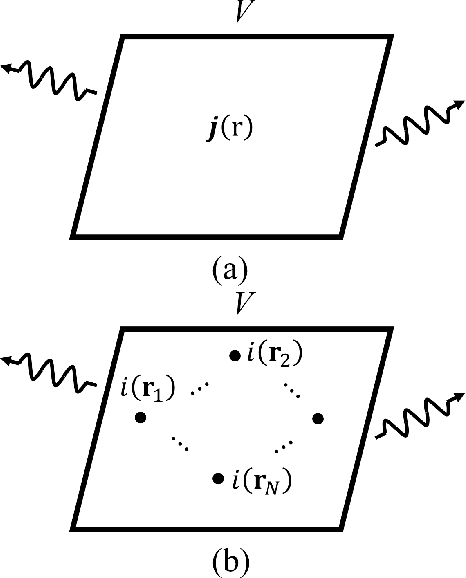
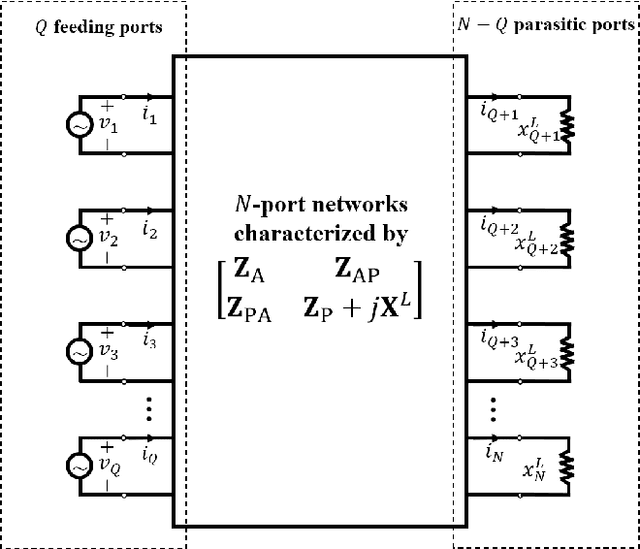
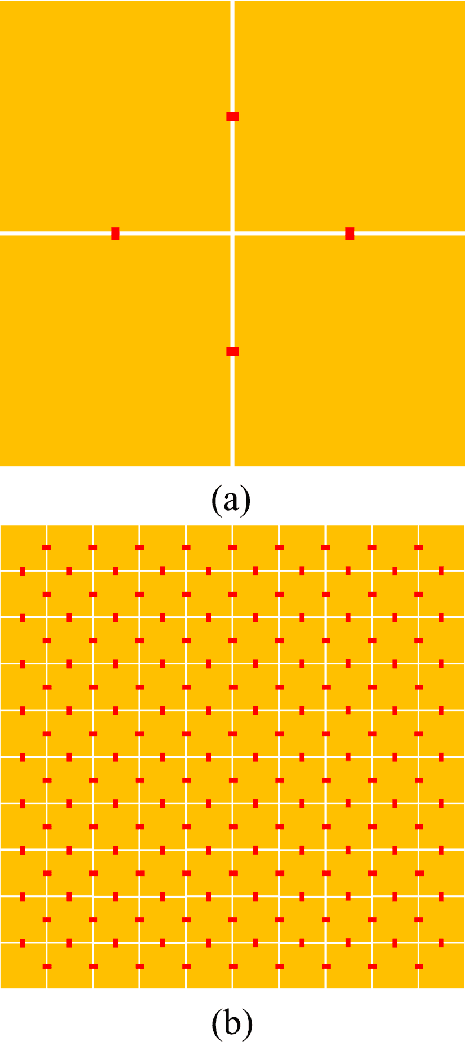
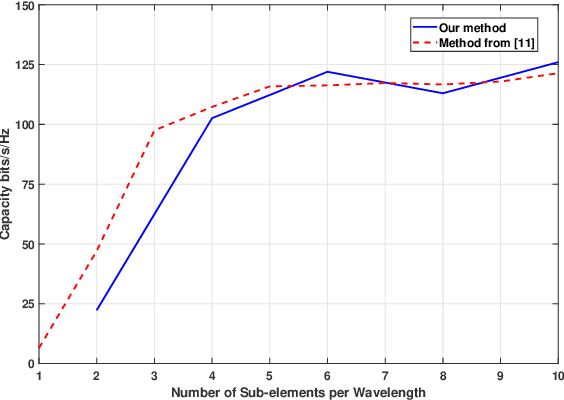
A method for achieving the continuous-space electromagnetic channel capacity bound using loaded N-port structures is described. It is relevant for the design of compact multiple-input multiple-output (MIMO) antennas that can achieve channel capacity bounds when constrained by size. The method is not restricted to a specific antenna configuration and a closed-form expression for the channel capacity limits are provided with various constraints. Furthermore, using loaded N-port structures to represent arbitrary antenna geometries, an efficient optimization approach is proposed for finding the optimum MIMO antenna design that achieves the channel capacity bounds. Simulation results of the channel capacity bounds achieved using our MIMO antenna design with one square wavelength size are provided. These show that at least 18 ports can be supported in one square wavelength and achieve the continuous-space electromagnetic channel capacity bound. The results demonstrate that our method can link continuous-space electromagnetic channel capacity bounds to MIMO antenna design.